I just got back from a week in Mexico City and honestly I get why the celiac community has mixed reviews. As someone who speaks Spanish, I was able to spontaneously walk into a restaurant, communicate my needs, and more often than not, they were able to accommodate me. That being said if I didn’t speak Spanish, I think I would have been nervous to eat anything anywhere. But if you’re on the fence about traveling to Mexico City (and you speak Spanish or are traveling with someone who does) I strongly encourage you to go for it! Mexico City stole my heart and I’m already dying to go back. I’d be lying if I said eating out was easy, but it’s far from the hardest place to travel with celiac disease. My hope is that in sharing how I navigated CDMX as someone with celiac disease, you might decide to experience this beautiful place for yourself.
I’m going to start off by sharing some general things you should be aware of about the cuisine (even if you’ve had Mexican food in other places, there are some things about the food in CDMX that might surprise you). After that I’ll share my method for determining if a restaurant was safe for me to eat at and how to order. I’ll finish things off with the specific restaurants and dishes I had during my trip. Sound good? Let’s get started!
General Tips for Eating Out in Mexico City
Some restaurants in CDMX use a mix of corn and wheat flour in their tortillas, so you can’t assume it’s safe just because it says “corn tortilla” on the menu. You have to ask if the tortilla has any wheat flour in it.
A lot of places that sell tacos also sell tortas (sandwiches) so even if they don’t have flour tortillas, cross contamination can still be an issue. Be on the lookout for places that only serve tacos or only serve platos fuertes, which are basically entrees that aren’t tortilla based. Ask how the dishes are prepared and if they use the same equipment for gluten free and gluten-full menu options. If they do use the same equipment, ask if they have any allergy protocols. A lot of the places I went to in CDMX don’t make their own tortillas on site, but if they do make flour tortillas that’s another potential source of cross contamination.
Compared to America there’s very few sources of hidden gluten you have to worry about: salsa inglesa (Worcestershire sauce), salsa soya (soy sauce), jugo de Maggi (it’s a condiment), or el knorr suiza (chicken bullion). A lot of places told me they don’t use any of these ingredients or they only use them in one or two dishes, which made hidden gluten surprisingly easy to avoid (also be sure to ask about bread/breadcrumbs as it’s sometimes used to thicken sauces). In fact, a lot of restaurants I spoke to took pride in the fact that their salsas, sauces, etc. were only made from fresh ingredients like tomatoes, onions, and chiles.
Very few people in CDMX know what gluten/celiac is HOWEVER I have never felt more accommodated and taken care of in my life. Not only was everyone I talked to more than happy to answer all my varied questions, but they were extremely knowledgeable about the ingredients they put in their food (I’ve traveled to multiple places where it’s difficult to get a straight answer about what ingredients are in a dish, so this was refreshing) and they were able to clearly explain how different menu items were prepared. They also understood cross contamination once I explained it and were happy to do whatever I asked of them in order to ensure that my food was being prepared safely. It felt like people were genuinely concerned about making me sick and took what I was saying very seriously.
This isn’t specifically about celiac disease, but it still feels worth mentioning: if you don’t have a high spice tolerance, you might end up eating a couple of semi-bland meals. This is because for some dishes, the main source of flavor is in the salsa, not the dish itself. To be clear, I ate plenty of things that were flavorful without being spicy; all I’m saying is be cautious as you try the salsas and be sure to start with a drop before dumping a heaping spoonful of any particular salsa onto your food.
How to Find Celiac Safe Food Options in Mexico City
I started my trip using a gluten free translation card, but stopped 2 days into the trip and ended up creating my own scripted series of questions instead (which I’ve shared below). I stopped using the translation card because I noticed that when I did, my servers had certain misconceptions about what I could and couldn’t eat. Multiple people thought I couldn’t eat meat or specifically that manteca (lard) was an issue. There was also some confusion around marinades. I’m not sure if the card was just too much information and they were having trouble keeping track – if that’s the case, honestly I get it – or if there was some sort of regional linguistic difference in vocabulary that was leading to confusion, but things got a lot easier when I stopped using the translation card.
Here’s the series of questions I asked:
¿Puedo preguntarte sobre mi alergia a la comida? Tengo una enfermedad que se llama celiaca y si como algo con harina de trigo me cae mal. ¿Cocinas mucho con harina de trigo aquí?
[Si sabes que quieres comer]
- ¿Cuáles son los ingredientes en este plato?
- ¿Usas salsa inglesa, salsa soya, jugo de Maggi, o el knorr suiza en este plato? Me gustaría saber porque esas salsas también contienen trigo.
[Si no sabes que quieres comer]
- ¿Qué me recomiendas que no contenga harina de trigo?
- ¿Usas salsa inglesa, salsa de soya, jugo de Maggi, o el knorr suiza en este plato? Me gustaría saber porque esas salsas también contienen trigo.
[Si quieres tacos]
- Yo veo que tienes tacos. ¿Usas tortillas cien porciento (100%) de maíz?
[Si también venden tortillas con harina de trigo o tortas]
- ¿Cómo se preparan (los tacos)? ¿Está en un lugar separado en la plancha? [Si no:] ¿Puedes limpiar la plancha, cocinar el mío en un sartén, o poner papel aluminio encima de la plancha antes de cocinar el mío? La razón es que mi comida no puede tocar comidas que contengan trigo porque si eso pasa también me cae mal. También me ayudarías si te lavaras las manos antes de preparar mi comida. De verdad, cualquier resto de trigo me puede enfermar.
[Si eliges un opción del menú que no es tacos]
- ¿Cómo se prepara (este plato)? ¿Está en un lugar separado en la cocina? ¿Usas la misma sartén/parte de la plancha/etc. para preparar mi comida y la comida que contiene trigo? ¿Puedes limpiar la plancha, cocinar mi orden en un sartén limpio, o poner papel aluminio encima de la plancha antes de cocinar mi comida? La razón es que mi comida no puede tocar comidas que contengan trigo porque si eso pasa también me cae mal. También me ayudarías si te lavaras las manos antes de preparar mi comida. De verdad, cualquier resto de trigo me puede enfermar.
[Si quieres alguna fritura]
- ¿Hay comidas fritas en tu menú que contengan gluten/trigo?
- ¿Lo cocinas en el mismo aceite?
I strongly recommend having a conversation with someone and not just handing them your phone. You have to be able to listen to their answers, clear up any misconceptions, and understand how they do things in their kitchen in order to decide if it’s safe for you to eat there. This is not a fool proof method, but it worked very well for me during my trip and it helped me weed out places that were too high risk for me to safely eat at. Speaking of risk level, here’s how I gauge it:
- Most of the menu is gluten free and they have strict allergy protocols and/or use dedicated equipment: extremely low risk
- About half the menu is gluten free, but they have strict allergy protocols and/or use dedicated equipment: low risk
- Most of the menu is not gluten free, but they have strict allergy protocols and/or use dedicated equipment: medium risk
I try to only eat at places I consider low risk, but something that made it trickier to gauge risk level in Mexico City is that some places would only recommend 2 or 3 options to me, which made me think those were the only gluten free options on the menu. By asking follow up questions, I realized that they weren’t saying the rest of the menu was full of gluten, but they were trying to steer me towards the menu options that had the smallest possible chance of cross contamination (this is why having a real conversation and asking follow up questions is always important).
I also feel it’s important to mention that I’m very sensitive to cross contamination AND I had a couple of unhappy stomach moments throughout this trip, BUT I honestly don’t think I got glutened. On day 3, I felt some pretty bad stomach pain after lunch and my anxiety immediately kicked into high gear. Half an hour later I had a normal bathroom trip and my pain was gone. On the last day of my trip, I had a couple of *unpleasant* bathroom visits, but again I don’t think it was gluten. In case you don’t already know, lots of people experience stomach issues when traveling for lots of reasons that have nothing to do with gluten. I ate out 3 times a day for 6 days in a row, my daily diet looked totally different from how it normally looks (which probably means more or less fiber than I’m used to), I tried new foods I’d never had before, and I ate more spicy food than I usually do. I also just learned that nopales are a mild laxative and I ate a LOT of nopales throughout the week…
It’s also possible that some of the meals I ate had trace amounts of cross contamination (less than 20 ppm) that accumulated in my system over time and that’s why I felt fine until the last day. I can’t know for sure, but without going into too much detail, what happened in Mexico City didn’t line up with my previous experiences of getting glutened and again there’s lots of non-celiac related reasons this might have happened. I’m not sharing this to scare you off of travel, I just want to be fully transparent about my experiences. I don’t pretend to be an expert, but I got diagnosed with celiac disease in 2017 and have put a lot of work into learning how to travel safely.
Where I Ate in Mexico City
For my first meal of the trip, I ended up at a restaurant near my hotel called Los Morros. I asked the server my questions and learned that while they do use both flour tortillas and corn tortillas, everything is prepared separately. I ordered el encostrado, which is a taco with a melted cheese “tortilla” filled with shrimp and octopus. It was delicious, but in hindsight not enough food considering I hadn’t eaten in 8 hours. If you’re also coming off a long flight, I always recommend ordering too much food. Worst case scenario, you have leftovers to bring back to your hotel.
The next morning I went to La Otilia, which is dedicated gluten free, and ordered the huevos rancheros and a smoothie. To be honest, the food was mid, but if that place was close to my hotel, I would have started every day with one of their smoothies.
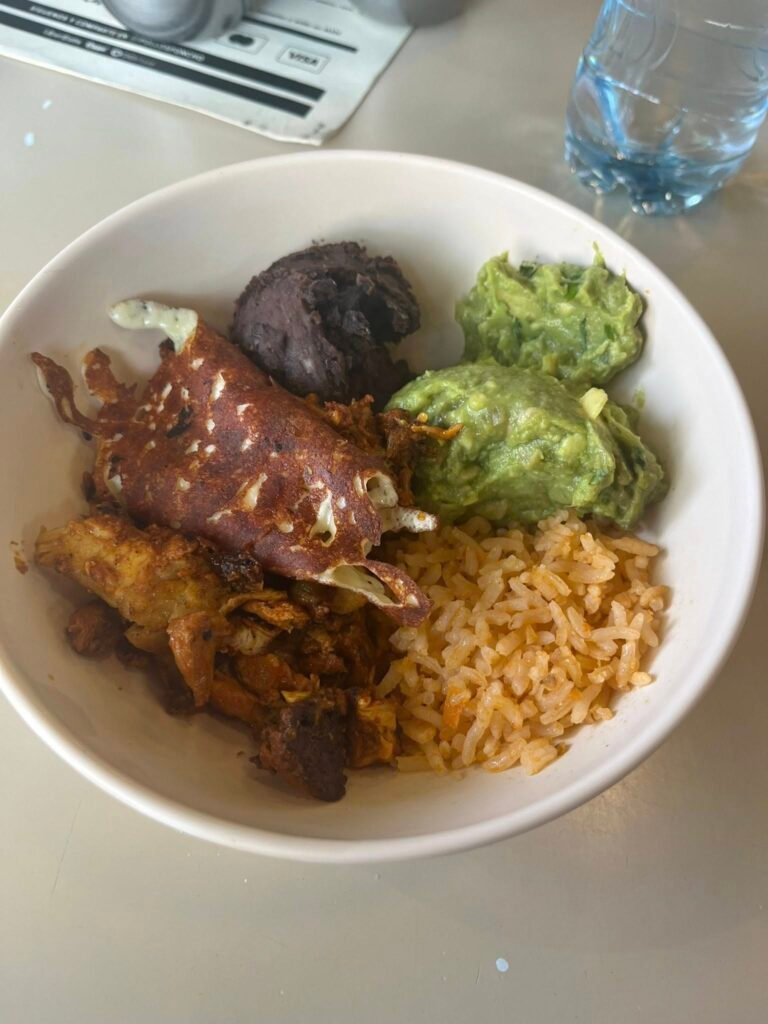
For lunch I ended up at Pollos Poncho, which was a truly delicious hole in the wall featuring all things chicken. I got the pastor de pollo burrito bowl (which comes with rice, beans, guacamole, and fried cheese) and it ended up being one of the tastiest meals of the trip.
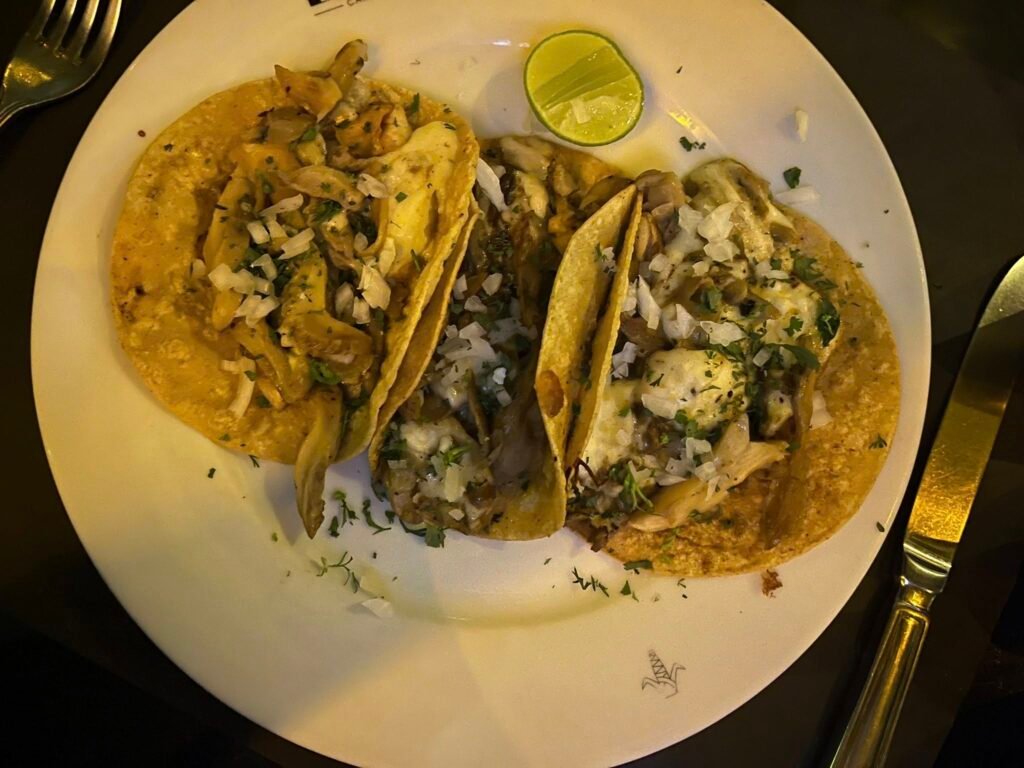
For dinner I tried using my gluten free translation card at El Pialadero de Guadalajara. My server asked if he could take my phone to show the chef (I then heard him reading the translation card aloud in the kitchen). He came back and told me there were only 2 things I could order. After some back and forth, I realized there were technically other GF options on the menu, but he had only given me the two safest options out of an abundance of caution. I ordered the beef barbacoa tacos and our server was so wrapped up in helping me that at first he forgot to take my friend’s order. When my food came out, instead of two tacos, I got two piles of meat on a plate. He was hesitant to bring me tortillas, but after I re-confirmed that they were safe, I convinced him to bring me some. This was the part of the conversation where I realized he (and maybe the chef) were just really worried about making me sick. Maybe you feel differently, but I found it a huge comfort to know how seriously they were taking things. Also my food was delicious.
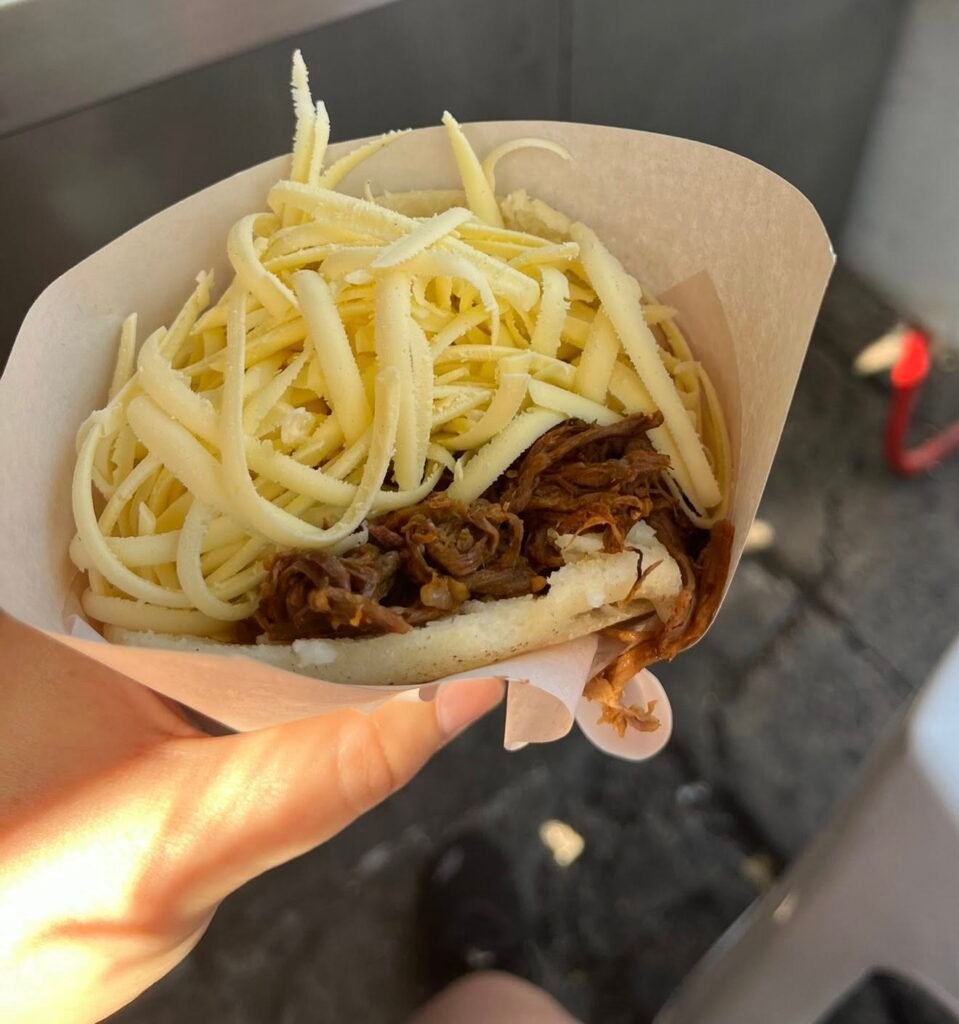
My next meal was such a positive experience I got a little emotional. My friend and I stopped at a food truck called Pídeme that served mainly arepas. When we got there, two people were inside the food truck and there was a woman sitting on a stool outside the food truck eating. When I started asking my questions, it was clear that the woman eating breakfast was in charge. She knew exactly which things on the menu I could eat and fully understood allergen protocols well enough to explain in detail to the man behind the plancha exactly what he needed to do. She then invited me to sit down next to her and started listing off general advice for me about how to eat safely in Mexico City. She didn’t know what celiac was, she’d never encountered this particular food allergy before, but she really understood and wanted to help me. I ended up ordering the pelua which is an arepa filled with shredded beef and manchego cheese. I ate it there at the counter while chatting with all three of them and another customer who sat down next to us. The arepa was wonderful, but more than that, it felt like they welcomed me as if I were family.
For lunch we stopped at El Huequito, which is a local taco chain. The food was safe, but entirely forgettable. I ordered the al pastor tacos, but Pollos Poncho’s al pastor was way better.
For dinner we went to El Califa and it ended up being the last time I used my translation card. After I show the translation card to the hostess and ask if I can safely eat their food, she takes my phone to a table of restaurant staff in the corner who pass my phone around and discuss for about 5 minutes. When she comes back, she hands me my phone and asks some follow up questions before showing me which menu items were safe. I realized that for some reason she thought manteca (lard) was a problem, so I cleared that up. She was also very hesitant to recommend any of the marinated meats but didn’t specify why (I should have asked, but I was tired and hungry and trying to move things along). Then she said I should get the beef but instead of getting a tortilla, she recommended I use a lettuce cup because they serve both flour and corn tortillas. When I asked how things were prepared, she literally brought me to the kitchen (which was amazing) and showed me how all the tortillas share a plancha but the meat has its own plancha, hence recommending meat in a lettuce cup. She also kept talking about minimizing grease on the meat and I tried to explain it wasn’t an issue, but she didn’t seem to fully get it. I ordered the lettuce cups and a side of nopales (cactus), then listened in as she put in my order with the kitchen, explained cross contamination to them, and told the man who’d be preparing my order that nobody else better touch my food. I’d like to remind you at this point in the story that she’s the hostess, not a server, but I think by now she felt personally responsible for my wellbeing. When my food came out, the thin sliced steak came out dry and she proudly told me they patted away the excess grease with a paper towel. I’m pretty sure it was seasoned with nothing but salt because they seemed to think seasonings were an issue as well. The hostess was very nice and even though I felt they were being overly cautious, it was coming from a good place. It also made me realize the translation card might not be the best way to navigate these situations.
The next day I had a breakfast of snacks I’d packed in my suitcase and we headed out to Xochimilco. I don’t know about you, but when I’m planning a trip I always read Wheatless in Wanderlust’s travel guides and I was both surprised and excited to see a recommendation for a boat tour in Xochimilco that included making your own lunch as part of the experience. I booked it right away and I’m so glad I did.
A van picked us up at our hotel and drove us out to Xochimilco where our guide, Day, met us at a coffee shop. This was the first stop on our excursion and we got to try cafe de olla: a delicious, traditional mexican coffee brewed with cinnamon, cloves, and star anise. The coffee was delicious, but my stomach flipped and nerves set in as we were all encouraged to sample a traditional bread I forget the name of – after rereading Wheatless in Wanderlust’s initial blog post, I’m pretty sure this cafe stop was a more recent addition to the tour. After everyone started sampling the breads, I went straight to Day and explained what celiac is. I then asked her for a more detailed picture of what the rest of the itinerary would look like, because in that moment I was questioning whether I’d be able to safely participate. She told me that we would each be preparing our own lunch with ingredients bought at the market and that I could sit directly next to her so that she was the only one passing ingredients to me. She and I both washed our hands after leaving the cafe and she assured me the vegetables would be washed as well. I felt a little better heading into the market, where we picked up all the ingredients we would need to make tlapique: a traditional dish of vegetables and cheese cooked in corn husks. The most exciting ingredient we picked up was huitlacoche, an edible fungus that grows on corn. As a celiac foodie, I love an opportunity to try new foods, especially something I can’t get back home in Seattle.
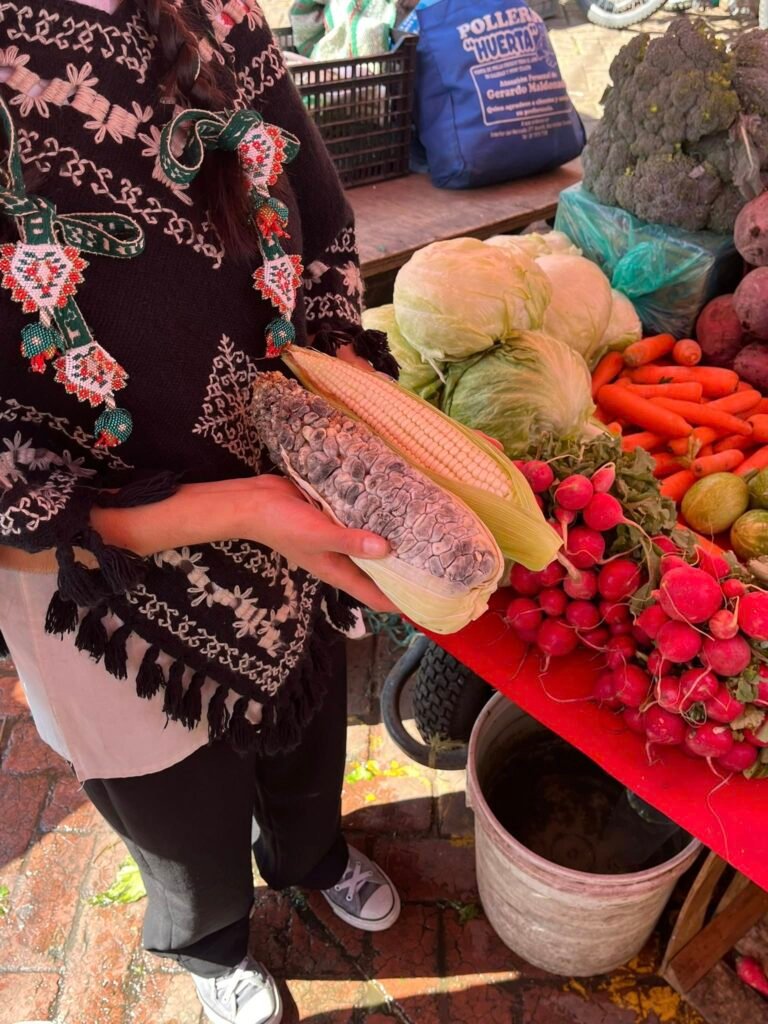
After getting all our ingredients, we headed to the boat. There was a tub at one end where all the vegetables were washed and there was a small charcoal grill where we’d be cooking our food. We sat at one long table and I made sure to get a seat right across from Day so that she’d be passing ingredients directly to me and none of the gluten eaters would be touching my food. We chopped our own vegetables on little cutting boards and put them into our corn husks along with herbs and salt, covered them in cheese, then covered the whole thing with another corn husk before wrapping it in tin foil. Day kept track of which tlapique belonged to each guest to make sure that I got back the one I prepared. After the tlapiques were cooked, Day warmed the tortillas we’d bought right on the grill so I skipped those (other people’s gluten covered hands had wrapped their tlapiques in tin foil which then touched the grill which then touched the tortillas). Honestly the tlapique was surprisingly flavorful given how simple it was to prepare and how few ingredients were involved.
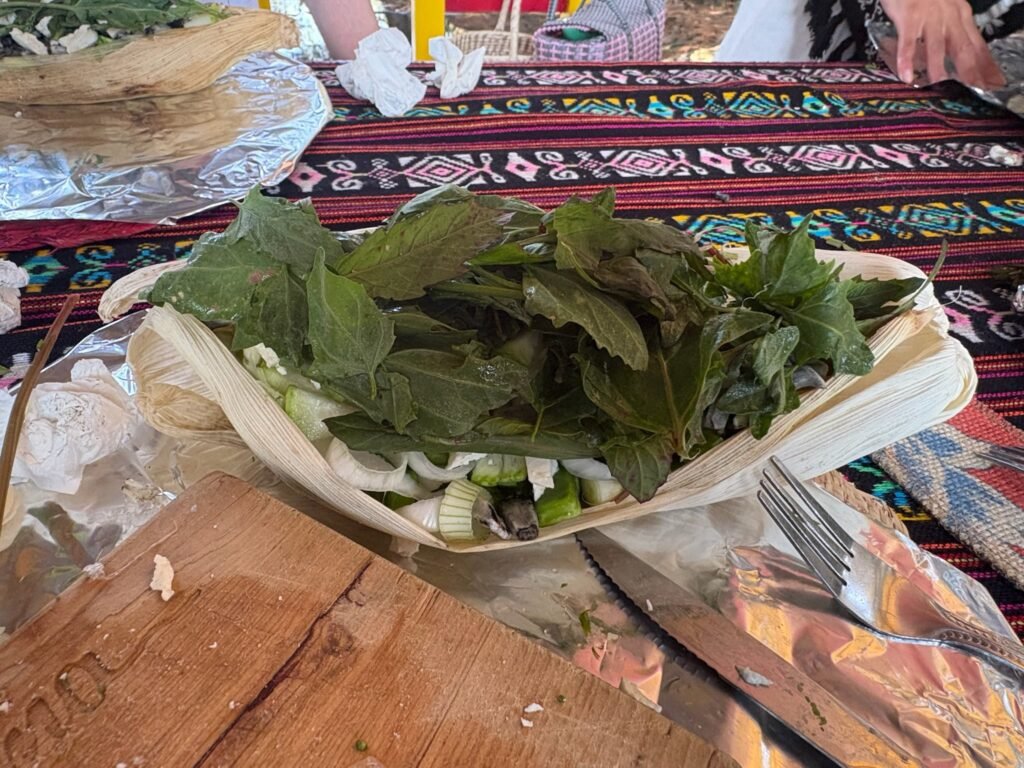
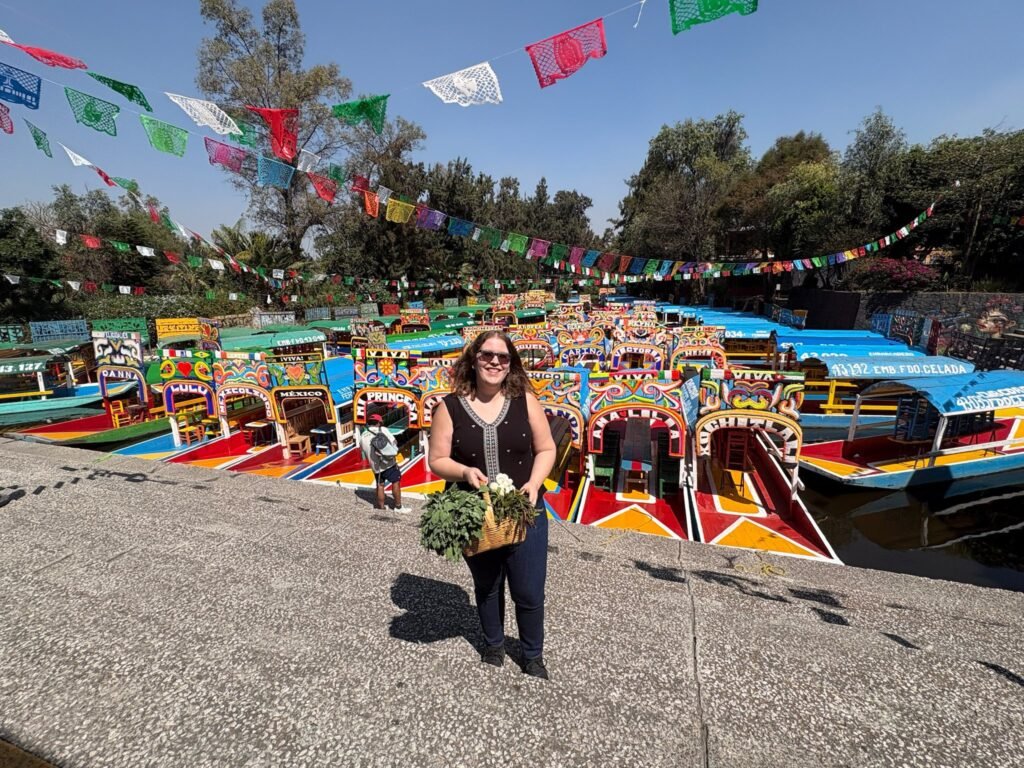
I’ll be honest, I was a little nervous eating because the whole experience was a bit riskier than I’d thought it would be going into it, but I didn’t end up getting glutened (this was the meal I alluded to earlier that I had some stomach pain after, but I honestly think it was nerves and/or the fact that this meal was the most vegetables I’d eaten since getting to Mexico). I think if I could do it again, I would have messaged them beforehand to see if it was possible to change the first stop of the trip to something more celiac safe and if the answer was no, I would have requested that everyone in our group wash their hands before we headed to the market. You might be wondering if it’s worth the hassle to do a cooking class on a boat, but I can honestly say I don’t regret participating one bit. This tour was such a unique and special experience, and I’m really happy I did it. If you’ve done any research into Xochimilco, you know that most of the tours are party boat situations, and it’s not that I’m anti-party boat, but I can drink tequila on a boat anywhere. I wanted to learn more about the significance of this UNESCO world heritage site so that I could fully appreciate where I was and what I was seeing. Day was an incredible guide and while our tlapiques were cooking, she told us the history and legends around the area we were traveling through. She is a natural storyteller and extremely knowledgeable. I was fascinated by everything we learned from her and this tour ended up being one of the highlights of the trip for me. So even if you decide not to participate in the cooking class part of the excursion, I think Day’s tour of Xochimilco is still more than worth it.
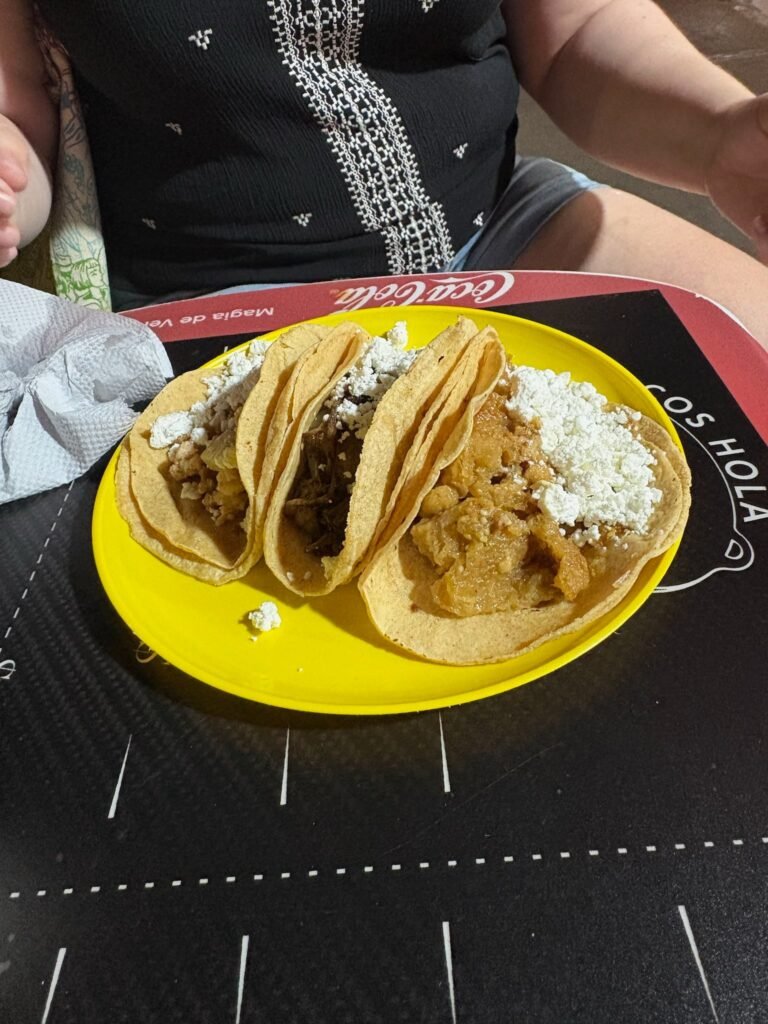
For dinner that night, we headed to Tacos Hola El Guero, a hole in the wall that sells only tacos. You guys, this place was so good I wish I’d been able to visit a second time during my trip. First of all, they only sell tacos and only use 100% corn tortillas. I asked about hidden gluten and was told there wasn’t any in their dishes, but I got there close to closing time and they had run out of a lot of things, so in hindsight I’m not sure if everything they serve is GF or if the things they hadn’t sold out of yet were all GF. Either way I was delighted and ordered 3 different types of tacos, because why not? The first one I tried was picadillo. Even though it was different from what I know picadillo to be (as a Cuban), it was delicious. My next bite was liver (another new food for me). The flavor was excellent and apparently liver is crazy good for you, so bonus points there. The last taco I tried was chicarron en salsa. The idea of soggy pig skin might not sound appetizing, but it was actually my favorite of the 3. My only complaint is that they put too much cheese – I didn’t think it was possible either, but the meats themselves were so flavorful they truly didn’t need the cheese. I couldn’t help but think if these were the options left over at the end of the night, imagine how delicious their most popular tacos must be!
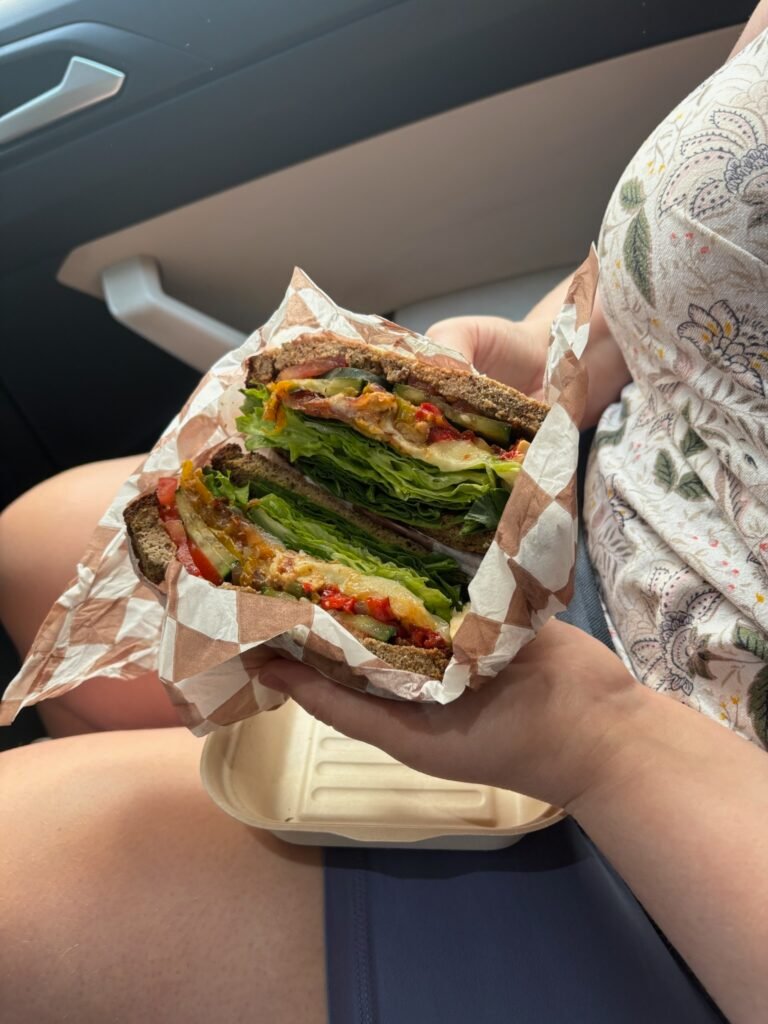
For breakfast the next day, I grabbed a sandwich from Aranciatta – a 100% GF cafe – and ate it in the cab on the way to Coayocan. I’m extremely picky when it comes to GF breads, but the keto bread was surprisingly good! I got the sandwich de pollo organico y vegetales and while I wasn’t brave enough to try the cilantro sauce in the cab for fear of spilling, the sandwich itself was flavorful enough on its own that I didn’t really miss the sauce.
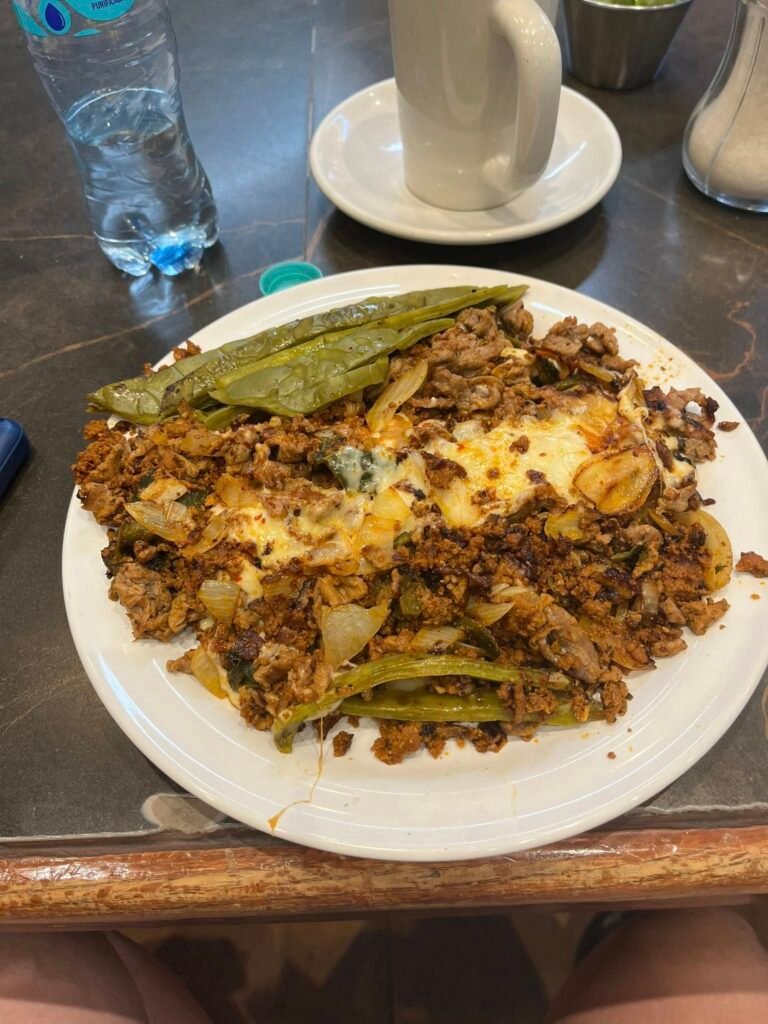
After visiting the Frida Kahlo museum, we went to the Coyoacan market for lunch. I’d initially intended to try one of two spots in the market that actually had reviews on Find Me Gluten Free, but that market is massive and we couldn’t find either of them. Instead we stopped at Pepe Coyotes, where I was told the only sources of gluten were the soups. I got the diablito alambre: steak and chorizo, strips of poblano and onions, covered in melted cheese. It was tasty, but if I’d known how big the servings were, my friend and I would have split one (and we probably still would have had leftovers).
On our way to Arena Mexico for Lucha Libre, we stopped at a restaurant called Pomonal. They served both tacos and sandwiches, but I could see the kitchen set up as he explained how things were prepared and the man taking my order insisted he would use a completely clean cutting board, pan, etc. for my order. I got the cochinita pibil and my first bite was decent, but I was foolish enough to try some of the habanero salsa with my second bite and blew out my taste buds. Whoops.
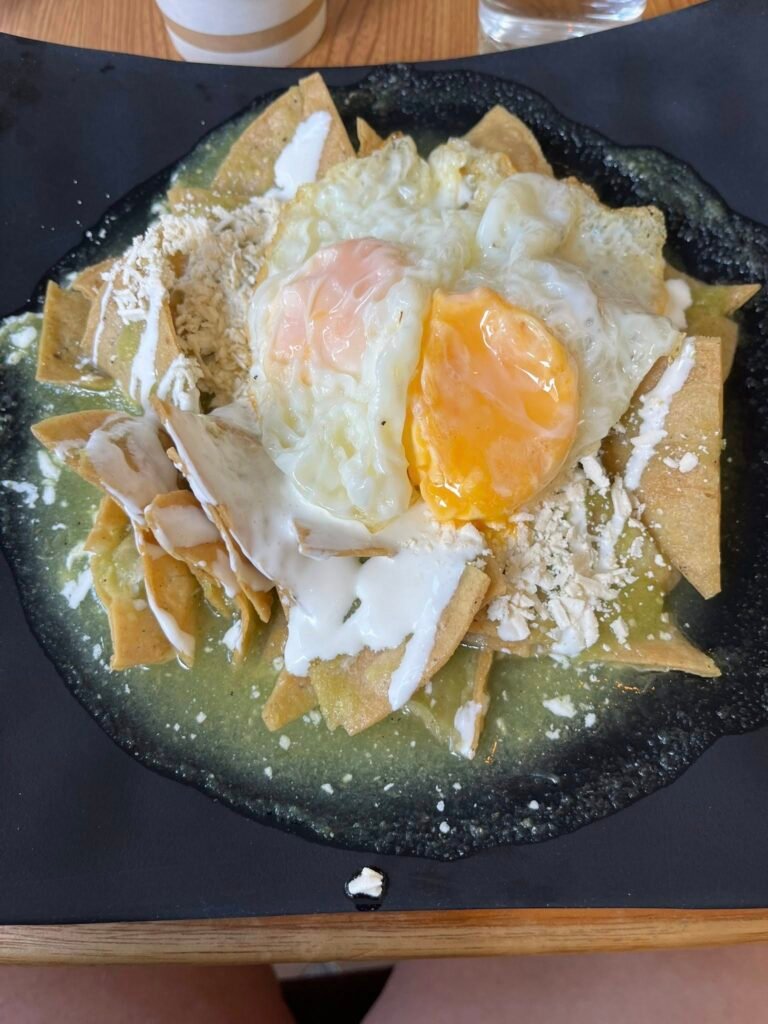
The next day we ended up at Mariana Bonita Cocina for breakfast and again most of the menu was GF. This was another place that took pride in using only fresh, whole ingredients in their sauces and salsas, so no hidden gluten to worry about. I got the chilaquiles with salsa verde and while it wasn’t the prettiest dish, it was delicious and (for me) the perfect level of spicy.
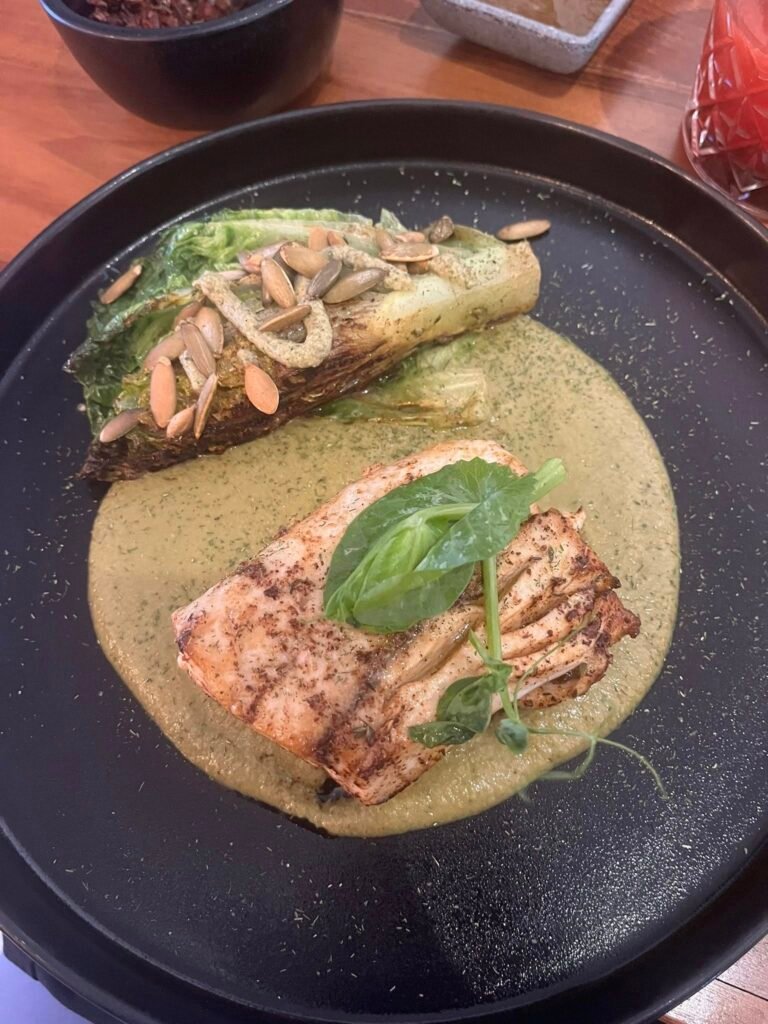
After visiting the Museum of Anthropology, we got lunch at Oja de Agua in Polanco. Even though they had sandwiches on the menu, I felt safe eating there after a conversation with my server. I got a mixed fruit cup and the pesto salad bowl, which was grilled tuna over a bed of spinach, mushrooms, and squash tossed in pesto sauce. It was tasty and refreshing. I’d recommend it if you’re looking for a break from tacos.
I was excited to go to Antolina given that it has 9 whole positive reviews on Find Me Gluten Free (which is a lot for a non 100% GF spot in Mexico City) and it did not disappoint. I believe there were only two menu items I couldn’t order and they answered all my detailed questions with ease. I got guacamole with chapulines (grasshoppers) as an appetizer and pescado (fish) with green mole for my main course. The food was very tasty and if you’re looking for a break from street food that’s not too expensive/stuffy I highly recommend it.
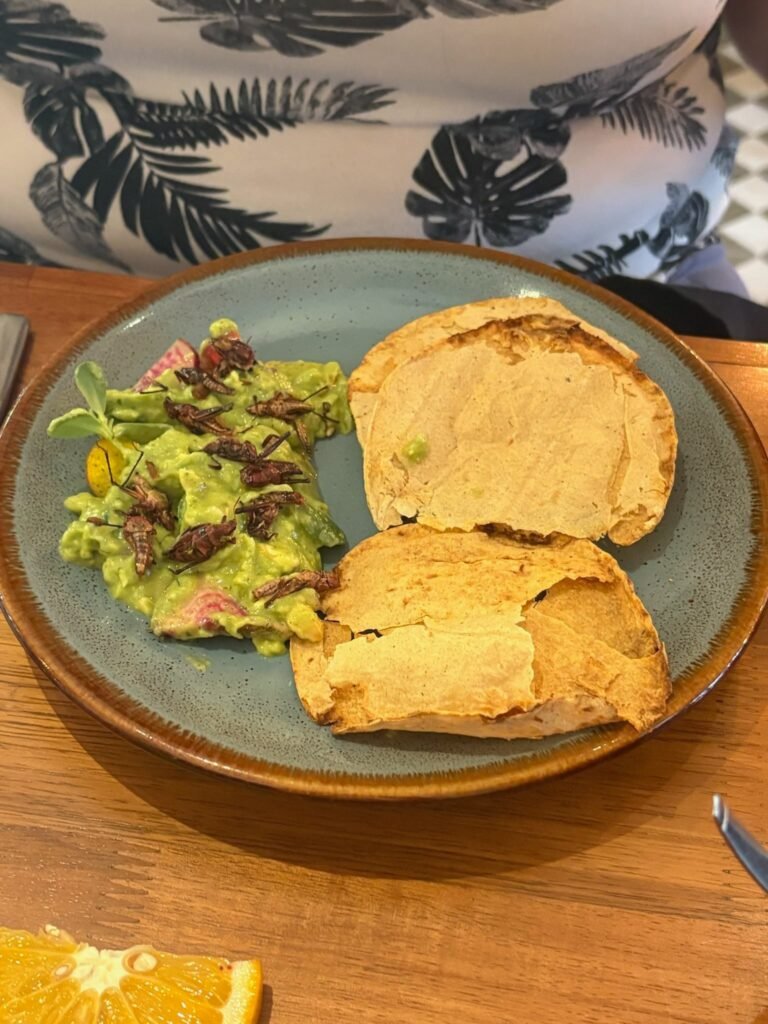
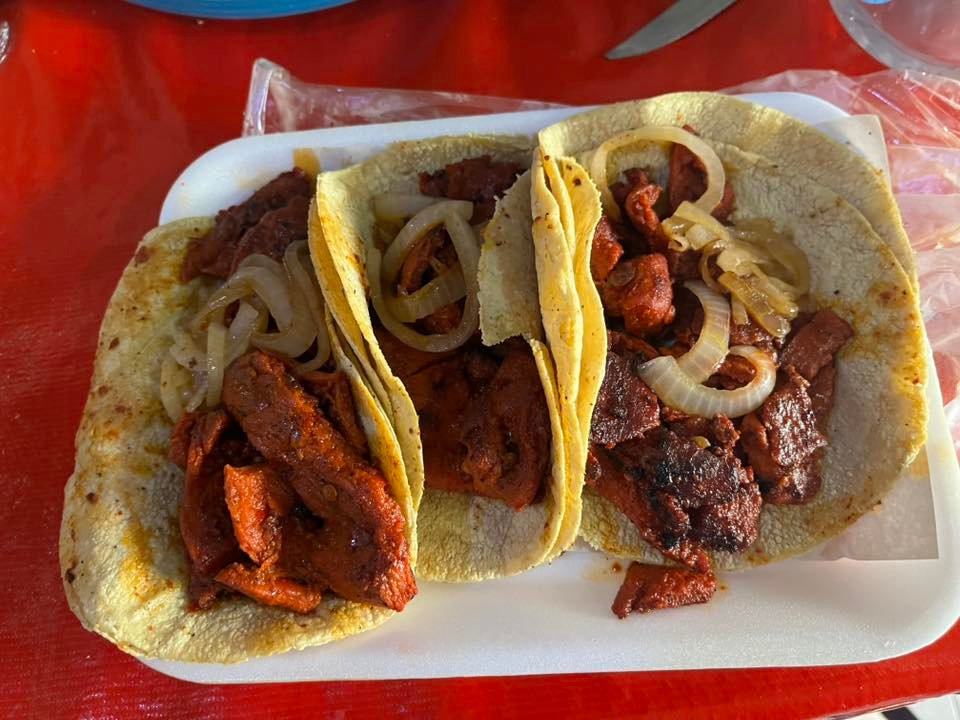
On my last morning, I was determined to make the most of the few precious hours I had left in CDMX, so I grabbed a protein bar for breakfast and headed into Centro, which is the Historical District. After a morning of wandering and museuming, I tried to visit Ricos Tacos Toluca, a hole in the wall taqueria I found on Find Me Gluten Free that was supposed to be 100% GF. Despite Google telling me they opened at 10:30, when I arrived close to 12:00, the man told me the food wouldn’t be ready for another hour. Luckily for me, this part of Centro (a little off the beaten path of the big, historical landmarks) was full of hole in the wall taquerias – I counted four within line of sight from where I was standing. The first place I tried to eat at used wheat flour in their corn tortillas, so I moved on to the next spot and hit the jackpot. Turns out Juanitos is another 100% GF hole taqueria only half a block from Ricos Tacos Toluca (I have a feeling there’s actually a few 100% GF spots in this part of town). I can’t tell you exactly what I ordered because I was feeling decision fatigue at that point, so I asked the woman working there what she recommended and she pointed to pork in a red marinade. After double checking that the ingredients in the marinade were all GF, I ordered tacos, nopales (cactus), and some chicharrones (deep fried pig skin). I think most people eat their tacos standing, but after walking 7-10 miles every day of my trip, my feet were begging me to sit down for five minutes so after I got my food, I asked the woman if she knew of anywhere within a block or two where I could sit to eat. When she said there wasn’t any, I sat down on the curb outside. Moments later, she called out to me and said she cleared a spot at her table in the kitchen for me so I didn’t have to sit on the street. She even let me wash my hands in her bathroom. I sat and chatted with her while I ate my tacos and she continued cooking. She was super sweet and said she’d be waiting for me to visit her again next time I’m in CDMX.
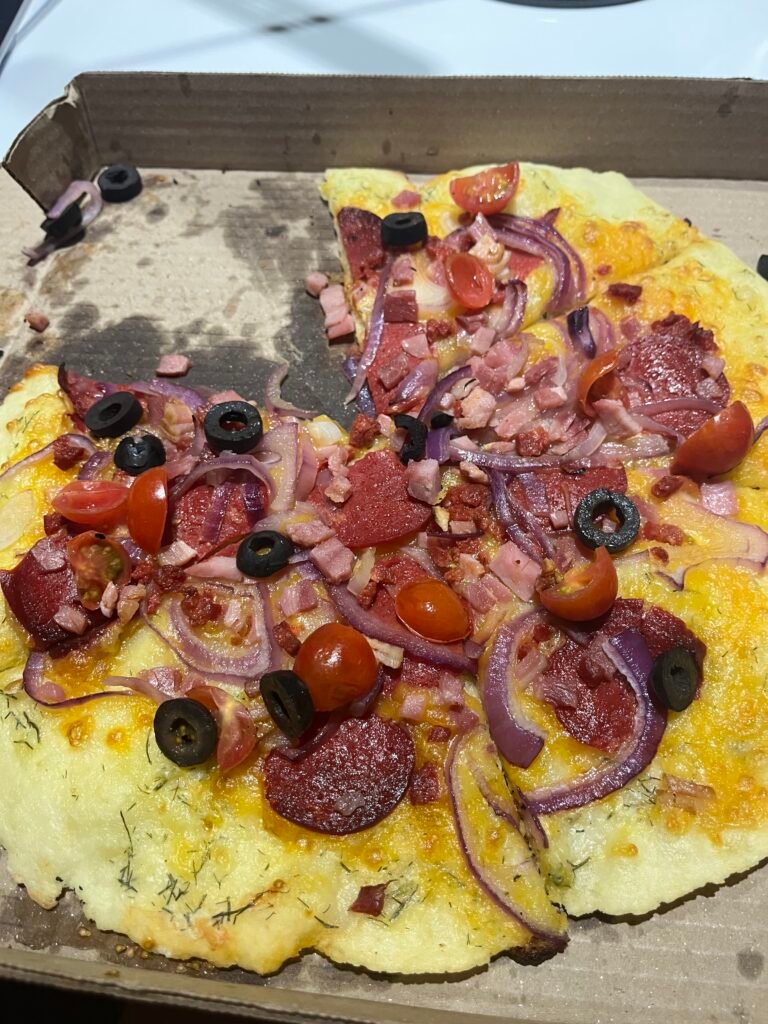
For my last meal of the trip, I was feeling too exhausted (both physically and mentally) to venture out and find myself safe food, so I ordered delivery to my hotel. MFY Pizza and Gluten Free, a restaurant endorsed by the Mexican Celiac Association, had excellent reviews on Find Me Gluten Free, but I’m a native New Yorker, so when it comes to pizza I’m extremely skeptical. I ordered the pizza de carnes frias, which came topped with 5 different kinds of cured meat, as well as tomatoes and black olives. I wouldn’t call it a pizza – the crust was closer to a flatbread in my opinion – but it was honestly really yummy and I appreciated having a safe, easy option for my last meal before getting on a plane.
Overall I had extremely positive experiences eating out in Mexico City. The closest I had to negative experiences was when restaurants didn’t feel comfortable serving me and I had to go looking elsewhere (I highly recommend locating a celiac safe option before you get hangry because you’re not always going to get lucky on your first try), but the vast majority of people I talked to were so helpful and accommodating that I felt cared for in a way I’ve rarely experienced outside CDMX.